 Education & Scholarship · शिक्षा तथा छात्रवृत्ति
Rural school support, scholarships for girls, teacher training and digital classrooms.
Nepal's net enrolment looks healthy on paper. In the wards where we work, the problem is not getting children into Class 1 — it is keeping girls in school after Class 8, and finding a teacher who will stay through the winter.
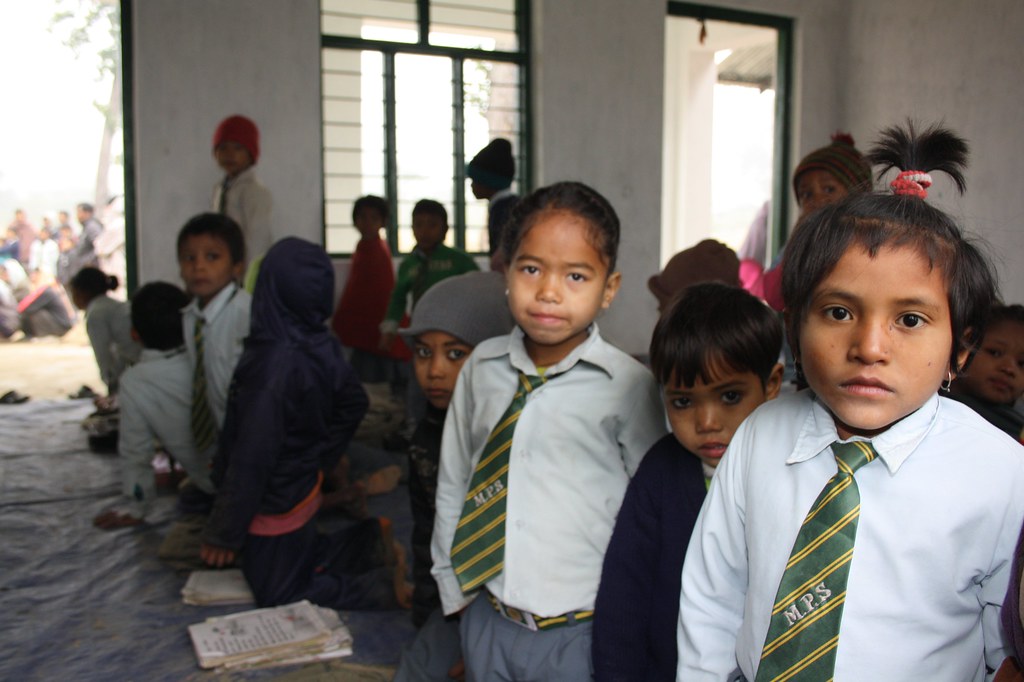
We support 26 community schools with scholarships, learning materials, teacher training and warm, well-lit classrooms. Scholarship lists are drawn up by the school management committee and posted publicly, so nobody has to ask a favour, and no family has to explain its circumstances in front of neighbours to receive help it is entitled to.
The work begins with a household survey rather than an assumption. Before a single rupee is committed in a new ward, our field team sits down with the school management committee, the ward office and — separately — with the mothers' group, and asks the same question three ways: which children stopped coming, and what changed in the week before they stopped. The answers are rarely the ones written in the district plan. Cost at the point of transition, the walking distance to the nearest secondary school, and household work that falls to the eldest daughter come up far more often than any lack of interest in education.
What follows is deliberately unglamorous. Fees, a uniform, exam costs and a set of books are paid directly to the school against a published list. Teachers receive twelve days of residential subject training each Poush, followed by monthly clinics where they bring the lessons that did not work and rehearse them with a trainer. Where the grid is unreliable, a solar panel, a projector and an offline content library do more for a classroom than a new building would. Where distance is the real barrier, we cover hostel costs instead of constructing anything at all — the cheaper answer is usually the one that lasts.
Retention is reviewed every month with parents, not annually with donors. A child who misses six consecutive days triggers a home visit, and the reason is recorded honestly even when it reflects badly on the programme. This single practice — a parent committee reading attendance aloud once a month — has done more for the numbers than any other component we fund, and it costs almost nothing to run.
Every school we work with signs a handover plan on the day the partnership starts. It names the committee that will hold the scholarship fund, the municipal budget line that will carry the recurring costs, and the date we stop paying. Some of those dates have already passed, and the scholarships are still being awarded without us. That is the outcome this service is designed to produce: not a longer list of schools we support, but a shorter one.
Support this work
Restricted giving is welcome — tell us the ward and we will report back on it specifically.